

What Caused the CS2 Skin Market Crash?
The main trigger landed on October 22–23, 2025 (the exact day varies by source and timezone): Valve expanded the Trade-Up Contract system so five regular Covert (red) skins could be exchanged for a regular knife or pair of gloves, while five StatTrak™ Covert skins produce a StatTrak knife instead — StatTrak inputs can't produce gloves. The resulting item is drawn from the collections of the five input skins; you don't need all five from one collection, though mixing collections spreads the odds across more possible outcomes instead of concentrating them on one. Before that update, knives and gloves came almost entirely from the rare special-item slot in case openings or from buying one outright on the market. Overnight, Valve added a new way to obtain them that didn't exist before, putting extra downward pressure on their prices while boosting demand for the Covert skins the contract consumes. Our breakdown of that trade-up update covers exactly how the new contract works if you want the mechanics in detail, and our general trade-up guide is the place to start if trade-ups are new to you.
It wasn't the only shock of 2025, either. A few months earlier, in July, Valve rolled out a trade-protection system that let players reverse a trade within a set window to fight account hijacking and scams. The upside was obvious for security; the downside was that it broke the instant-resale loops a lot of third-party marketplaces and cash-out flows depended on, and it came with a 30-day trade and market cooldown attached to any reversed trade. Reports at the time put the resulting pullback in the hundreds of millions of dollars — smaller than October's crash, and driven by liquidity drying up rather than a flood of new supply, but a reminder that 2025 was a genuinely rough year for CS2's economy before the trade-up update even hit.
How Big Was the October 2025 Crash?
Market-cap estimates differ substantially between trackers, and not just by a little. The total CS2 skin market cap is generally put at around $6 billion heading into the update. From there, our own coverage at the time tracked capitalization falling to roughly $3 billion — close to a 50% drop — before recovering to about 75% of its pre-crash peak within a few days, while other trackers recorded a smaller decline, with the trough closer to $4.2–4.3 billion, or roughly 25–30% down. These numbers shouldn't be read as directly comparable: different trackers price different sets of items, use different snapshot times, and handle untradeable or low-liquidity items differently, so treat any single headline market-cap figure as an estimate rather than a precise measurement.
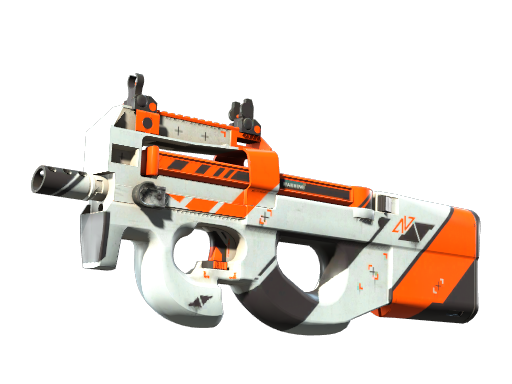
What's not in dispute is the direction prices moved. Knives and gloves — now obtainable through trade-up contracts as well as case openings — fell sharply, with some mid-tier finishes losing well over a third of their value within days. Covert skins, the raw material for the new recipe, moved the opposite way just as fast. One example from our own coverage: the P90 | Asiimov (Battle-Scarred), an unremarkable skin that had been worth around $7, jumped to nearly $90 within a week simply because it was suddenly useful as trade-up fuel.
What's Changed Since the October 2025 Crash?
The Covert side of the story held up. The P90 | Asiimov (Battle-Scarred) that spiked to around $90 right after the update is listed around $180 on Skin.Land today — it didn't just hold its post-crash gain, it kept climbing. The AK-47 | Asiimov (Minimal Wear) is another example of an eligible Covert skin, currently listed around $50 on Skin.Land — though its current asking price alone doesn't tell us how much it has actually gained since the update without a verified pre-crash figure to compare it against. As long as the trade-up system stays available, eligible Covert skins are likely to keep this extra source of demand as crafting material — though their prices will still move with input costs, the knife and glove outputs they can produce, and overall market conditions, not a guaranteed floor.
Knives and gloves tell a messier story. Multiple trackers reported a strong rebound through the spring of 2026 as the initial panic selling faded, but independent market data later in the year showed broad softening again across much of the skin market, knives included — so "recovered" isn't really the right word for where things stand since the crash. It's genuinely uneven by model and finish: grail-tier Doppler finishes have kept commanding serious money even through the volatility (the Talon Knife | Doppler Ruby (Factory New) is still listed around $2,720 on Skin.Land today), while plenty of mid-tier knife finishes remain well off their pre-crash highs. If you want to track this kind of swing yourself instead of relying on a single headline number, our guide to reading the CS2 price graph walks through how to separate a real trend from short-term noise — useful here, because total market-cap estimates for the same period from different trackers have ranged anywhere from under $4 billion to well over $7 billion, depending entirely on methodology.
Will CS2 Skin Prices Recover Further?
Nobody can promise that, and anyone who does is guessing. What can be said is that the structural change looks permanent unless Valve reverses it: knives and gloves now have an additional way to enter the market that didn't exist before October 2025, so the old scarcity-driven pricing for mid-tier finishes may simply not come back the way it was. Covert skins picking up a new role as crafting material, on the other hand, looks like it's here to stay for as long as that trade-up path exists. If you're weighing whether any of this is worth buying into, our honest breakdown of investing in CS2 skins and our picks for skins worth investing in go through what's actually held value and why.
The bigger lesson from 2025 is really about platform risk rather than any one price. Valve changed the rules twice in a single year — once on trading itself, once on supply — with no advance warning either time. If you're holding anything long-term, our guide on when to sell and our trading vs. investing approach cover how to think about that risk practically, rather than just hoping the next update doesn't land on your inventory.

FAQ
What caused the CS2 skin market crash?
Valve's October 2025 Trade-Up Contract update let players exchange five Covert-rarity skins for a knife or a pair of gloves. That gave players a new way to obtain items that had previously only come from case openings or direct purchase, crashing knife and glove prices while demand — and prices — for eligible Covert skins spiked.
How much value did the CS2 skin market lose?
Estimates vary significantly by tracker. Some reports put the total market cap falling from around $6 billion to roughly $3 billion within 48 hours — close to a 50% drop — while others recorded a smaller decline to around $4.2–4.3 billion, or roughly 25–30%. Different trackers use different pricing data and methodologies, so these figures aren't directly comparable.
Did all Covert skins jump in price after the update?
Many previously inexpensive Covert skins saw substantial price increases as players began using them for knife and glove trade-ups, but not all gained equally. The size of each increase depended on the skin's availability, its eligible output pool, and the economics of the resulting contracts.
Have knife and glove prices recovered since the crash?
Unevenly. Some grail-tier finishes have kept strong demand throughout, while many mid-tier knife and glove finishes remain well below their pre-crash prices, and broader tracker data through 2026 shows the recovery has been inconsistent rather than a clean bounce-back.
Was the October 2025 update the only market shock that year?
No. An earlier July 2025 update adding trade reversal protection also triggered a smaller pullback by freezing up fast-resale liquidity, months before the October trade-up change caused the much bigger crash.
Is it still worth buying CS2 skins after the crash?
It depends heavily on which skins. Items with genuinely closed or heavily constrained supply have kept their value far better than anything whose supply Valve can still expand with a single update — our investing guide above goes through the full picture.



Z komentarzem