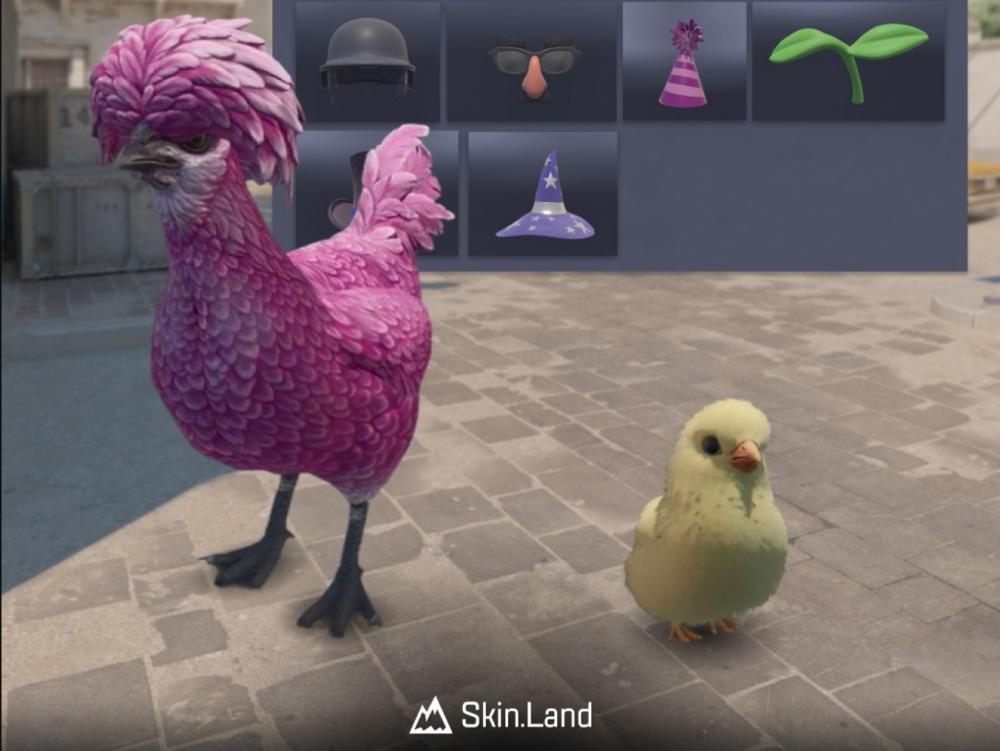

CS2 Chicken Eggs Explained: How to Get and Hatch Your New Pet
Valve recently shipped the massive "Rush Hour" update for Counter-Strike 2. While the official patch notes focused on the new 3v3 mode and gameplay tweaks, they left out a massive, literal Easter egg: Pet Chickens.
Currently, everything the community knows about these new pet cosmetics comes from dataminers and players discovering them firsthand. Here is a breakdown of how the new system works.
How to Get a Chicken Egg in CS2
You cannot buy an egg from the in-game store or the Steam Community Market. The only confirmed way to get one is through your Weekly Care Package (the weekly reward drop that normally hands you a weapon skin or a case, and which requires Prime Status).
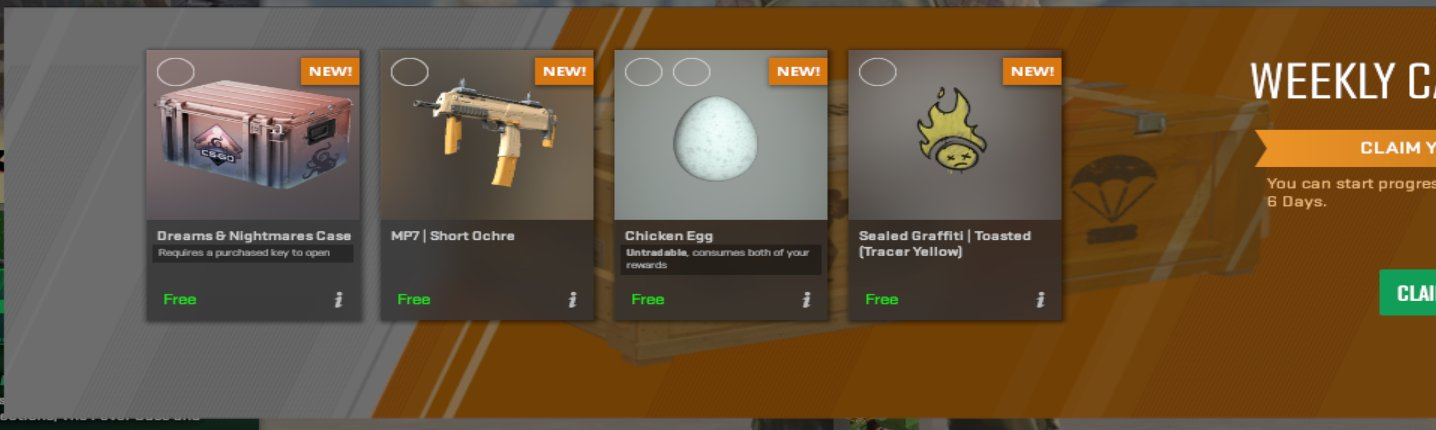
If you receive an egg in your drop, it will replace the usual two-slot reward system, so you must sacrifice both reward slots to claim it. It is also one pet per account — if you already have an active pet, you won't be offered a new egg. It is currently unconfirmed if everyone is guaranteed an egg eventually, or if it is entirely randomized.
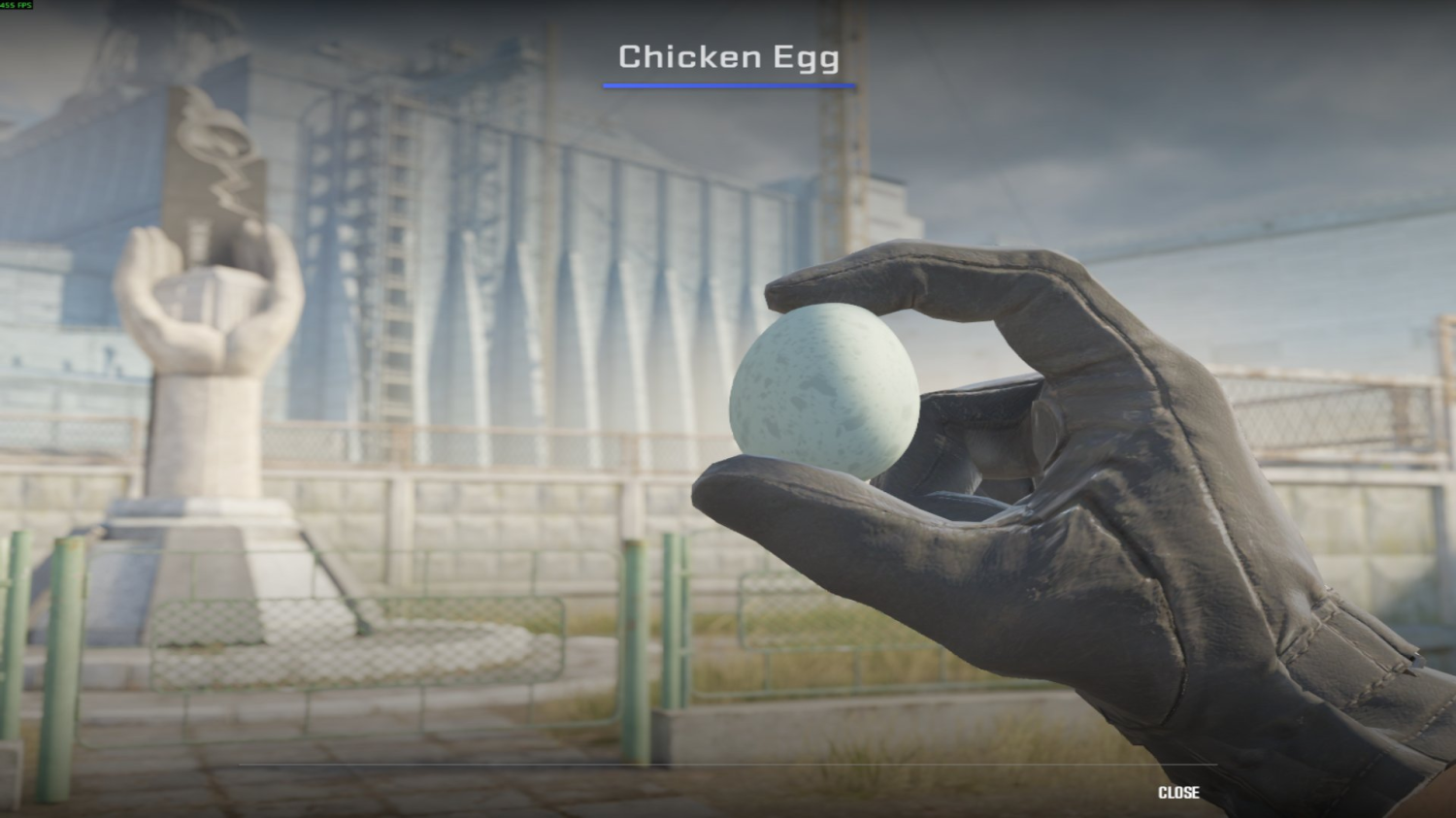
The Life Cycle: Egg → Chick → Pullet → Hen
Once you claim an egg, it doesn't just sit in your inventory like a standard case. It appears in a small wicker basket next to your character model on the main menu, and the pet grows through four stages:
The Egg: It sits passively on the menu screen. Hovering over it displays a status message stating, "Your egg will hatch soon."
The Chick: After an incubation period, a hatching animation plays, revealing a baby chick. You can interact with it, pet it, and even give it a name, but it is too young to deploy with you.
The Pullet: A young hen with its colours coming in. The game marks a pullet as cleared to join you in matches (in solo queue or when you are the lobby host), though exactly how that plays out in live games has not been confirmed yet.
The Hen: A fully grown bird and the final stage. Adult chickens can learn tricks, sit on your character's shoulder in the loadout screen, and pose in a photo booth feature.
Players can also track their flock using the Hatchbook, a new collection interface where you can keep a scrapbook of your pets.
How to Feed Your Chicken
Here is the part the patch notes never mention: your pet needs chicken feed, and this is the make-or-break mechanic.
Feed also comes from the Weekly Care Package — and, just like the egg, a feed drop uses both of your reward slots.
The game warns you when your pet is running low on food.
Keeping the pet fed is required for it to grow from one stage to the next.
If the food runs out, an adult pet leaves for good, and an egg that runs out of food never hatches. Your Hatchbook keeps the photo history, but the bird itself is gone.
In short, getting the egg is only step one — you have to keep spending weekly reward slots on feed to actually raise it.
Breeds and Rarity
Dataminers have uncovered 34 adult color variants across three distinct chicken breeds:
Catalana (13 variants) — the classic Counter-Strike chicken model.
Polish (12 variants) — recognisable by the crest of feathers on its head.
Silkie (9 variants) — the soft, fluffy breed.
While many look like standard poultry (white, brown, tan), there are also exotic variants hidden in the game files, including toxic green, neon purple, and bright blue fading chickens. The game files do contain rarity/weight data for some variants, but Valve has not confirmed that those weights are the real in-game drop odds, nor published any official tier list.
Can You Trade Them?
As of right now, CS2 chickens, eggs, and feed are entirely untradable and cannot be listed on the Steam Community Market.
However, given that Valve has built an entire "Hatchbook" collection interface and created 34 variants, players speculate that a secondary market will eventually open up. If these chickens become tradable in the future, the "First Wave" of eggs from September 2026 will likely be the oldest in existence, making them highly sought after by collectors.
For now, beware of scams—anyone offering to sell or trade you a CS2 chicken is trying to trick you. Keep leveling up your XP, check your Weekly Care Packages, and wait for your own egg to arrive.
FAQ
What is the chicken egg in CS2?
It is a brand-new pet cosmetic that Valve secretly added to Counter-Strike 2 during the September 22, 2026, "Rush Hour" update. The egg sits in a basket next to your character on the main menu, eventually hatching into a chick that grows into a full-sized pet chicken.
How do I get a chicken egg?
The main way to get an egg is through your in-game Weekly Care Package. If you choose to claim it, the egg takes up both of your weekly reward slots, and it is one pet per account — you won't be offered a new egg while you already have an active pet. It cannot be purchased in the store or bought from other players.
I got an egg — what do I do next?
Feed it. The egg needs chicken feed to hatch, and feed also drops from your Weekly Care Package (using both reward slots). Keep it fed and it hatches into a chick in about a week; let the food run out and the egg never hatches. After that, you keep feeding the pet to grow it from chick to pullet to hen.
How long does the egg take to hatch?
Valve has not published an official timer or progress bar. However, early reports from the community suggest the incubation period is around a week, provided the egg has enough food.
Can I trade or sell my CS2 chicken egg?
No. According to player reports, eggs are currently completely untradable and cannot be listed on the Steam Community Market. It is unknown if this will change once the eggs hatch into adult chickens.
How many different chicken variants are there?
Dataminers have found three distinct breeds in the game files: Catalana (the classic chicken), Polish (which has a feathery crest), and Silkie (a soft, fluffy breed). Across these three breeds, there are 34 adult color variants.
Are there other pets besides chickens in CS2?
No. As of right now, chickens are the only pets discovered in the game files, and Valve has not announced plans to add any other animals.





Write comment